When someone books through Airbnb or VRBO, they aren't booking with the host. They're booking with the platform — which keeps the guest's contact information, controls how the two of you communicate, and decides whether that guest ever hears from the property again. When someone books direct, they're choosing a name, not a listing number. That difference determines who gets the next booking.
What Happens to the Guest Relationship When Someone Books Through an OTA?
The guest scrolls a grid of photos, checks a star rating, and sees a host name that functions more like a username than an introduction. They message through the platform's inbox, pay through the platform's checkout, and get a receipt from the platform. Even a host who writes a warm, personal welcome message is working inside a system built to keep the guest's attention — and the guest's contact information — with the platform, not with the property.
Airbnb owns that relationship by design, not by accident. Hosts don't get a guest's real email address by default, and the platform's messaging system is the only sanctioned channel for contact before, during, and after the stay. The guest booked "an Airbnb." Whether they remember which specific host it was a year later depends entirely on how the stay went — nothing in the booking process itself reinforced the name.
This is the structural problem, and it isn't personal. Airbnb isn't hiding the guest relationship out of malice. It's protecting its own repeat-business engine. Every guest who forgets a host's name and books "an Airbnb" again next year is a guest the platform gets to resell — to that same host, a competitor three doors down, or someone who hasn't built a listing yet.
What Changes When a Guest Books Direct?
A guest who lands on a host's own website, reads about the property in the host's own voice, and checks out through the host's own booking engine is doing something categorically different. They typed a URL, or clicked a link that led somewhere with a name attached to it — not a platform, a place. They handed their email address to the host, not to a marketplace.
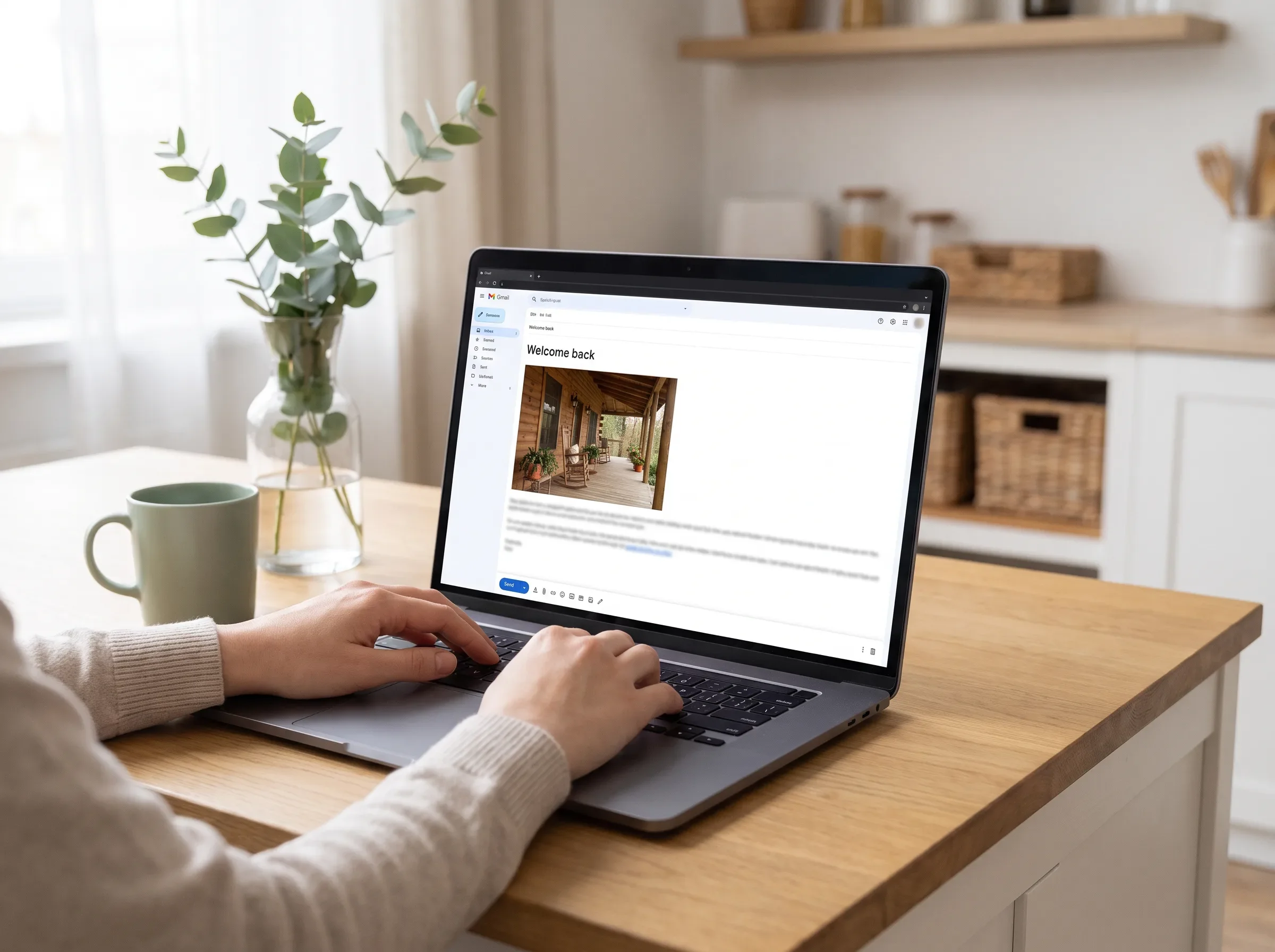
That guest can be added to an email list. They can get a pre-arrival guide written in the host's own voice instead of a generic platform template. They can be invited back next season without asking anyone's permission first. None of that is possible with a guest who only knows a property by its listing photos.
This is the real argument for a direct booking website, and it was never really about saving 15.5% on one reservation. It's about who gets to talk to the guest after checkout.
Why Does the Relationship Matter More Than the Commission?
The commission stings once, on one invoice. Losing the guest relationship costs every booking after the first one — the repeat stay, the referral, the review that turns into a testimonial, the guest who books three years running because getting an email from a property they remember feels different from scrolling a search grid trying to recall where they stayed last time.
Direct bookings also behave differently before they ever happen. A guest who finds a property through the host's own marketing has already chosen that brand over the aggregator. A guest who arrives through a host's own channel already trusts the property before booking it. A guest scanning an OTA search results page is comparing that property to forty other listings with the same three amenities and no reason to remember any of them.
What Does It Cost to Never Fix This?
A property known only as "the Airbnb near [location]" gives its own guests no reason to look for it specifically. When they're ready to book again, they'll go back to the platform, search the area, and pick whichever listing has the best photos and the most recent reviews that week — which might not be the same property at all.
That's the actual cost of staying entirely OTA-dependent. Not the 15.5%. The fact that the business has no memory of its own guests, and its guests have no memory of the business. A host who's been hosting for five years and can't name their last ten repeat guests isn't running a hospitality business with a customer base. They're running a rotating door for a platform that owns the guest list.
What Does Owning the Guest Relationship Look Like During the First Stay?
It starts at checkout on the host's own site. The booking engine collects the guest's name and email address, and the host decides what happens next. The confirmation arrives from the property. A few days before check-in, a pre-arrival guide follows with the door code, parking notes and house rules.
At Fjellsangin, my cabin near Mount Rainier, Hostfully runs as the property management system behind a Squarespace site. StayFi puts an email capture on the wifi login page, which reaches the other adults in the group, not only the person who paid. Flodesk sends the email after checkout and the one next season. The cabin has taken direct bookings only since July 2026.
The tools matter less than where the email address lands. If it lands somewhere the host controls, the next message is the host's to send. The guest list is one of the few assets a host can fully own; the rest are covered in what short-term rental hosts actually own.
Common questions
Do I have to leave Airbnb to get direct bookings?
No. Many owners with one to three properties keep the listing for discovery and add a direct booking website beside it. The listing brings in first-time guests. The website and email list bring them back.
Can I contact Airbnb guests after they check out?
Only through Airbnb's messaging system. Hosts don't get a guest's real email address by default, so there is no channel outside the platform for inviting that guest back. The email address collected on a direct booking fills that gap.
Why aren't guests booking on my direct booking website?
Usually the site gives them no reason to trust it over a listing they already know. If STR direct bookings are slow, audit the brand before the booking engine: the name, the photos, the reason to book direct, and whether the site looks like one real business.
How Does a Host Start Owning the Relationship?
This doesn't mean pulling the listing down. Airbnb and VRBO are still the best discovery engines most independent hosts have access to, and going fully off-platform is rarely the right move for an owner with one to three properties. The shift is about building a second channel — a direct booking website, an email list, a guest journey that doesn't dead-end at checkout — so a stay has a chance to become a relationship instead of a transaction that happened once and left no trace.
If you want to see where your own setup sends guests back to the OTA, the STR Starter Audit reviews your listing, website, guest journey, visibility and brand, then hands you a ranked list of what to fix first.
The commission is the symptom. The missing relationship is the diagnosis.