When ChatGPT, Google's AI Overviews, or Perplexity can't find your vacation rental website, the cause is almost always structural, not competitive — a missing sitemap, a blocked crawler, a title tag aimed at the wrong keyword, or a homepage with nothing written in plain, citable sentences. Five checks catch most of it, and none require a developer.
What Does “AI Search” Mean for a Host With One or Two Properties?
AI search tools don't crawl the web the way a person browses it. They read your pages as text, extract facts, and decide whether those facts answer a question someone typed. A guest asking “pet-friendly cabin near Mount Rainier with a hot tub” isn't going to scroll ten blue links to find you. They'll get a direct answer, and that answer comes from a page that states the fact plainly enough to be lifted and cited.
That's the shift. Ranking on page one of Google used to be enough. Getting cited inside an AI-generated answer is a narrower target, and most independent host websites aren't built to hit it — not because the owner did anything wrong, but because nobody told them the rules changed.
We ran this test recently on a real, randomly selected vacation rental website, treating it like a live audit. The site's title tag read “Virginia Beach Vacation Rentals.” Every property listed on the site was in San Diego.
AI search tools don't guess intent. They read exactly what's written. A mismatch like that quietly tells ChatGPT and Google the entire site is about a city the owner doesn't operate in — and the owner never finds out, because nothing breaks. The site just stops showing up for the searches that would have sent a booking.
Here are the five checks from that audit, in the order to run them.
Does Your Website Even Have a Sitemap?
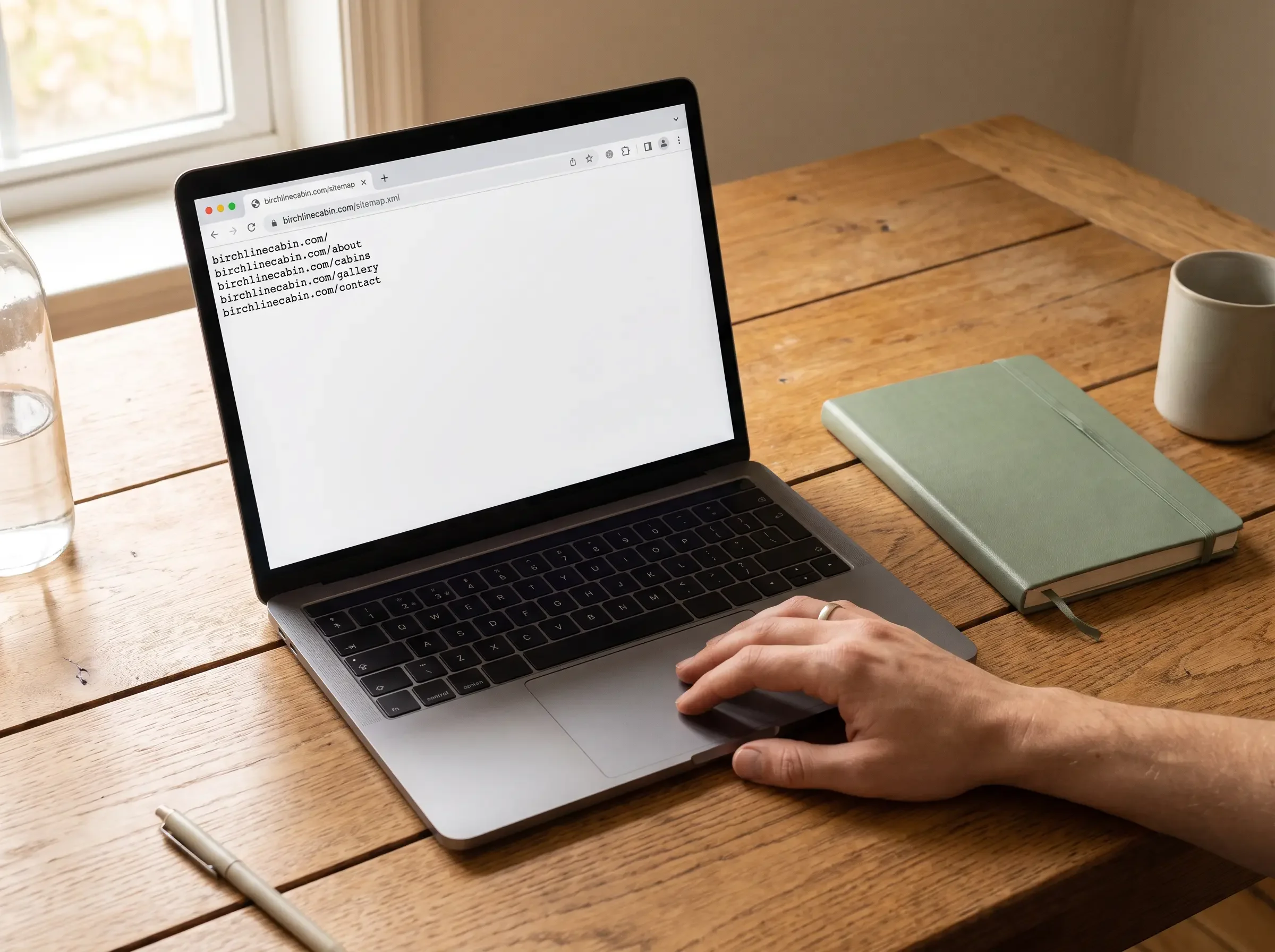
A sitemap is the list of pages you're handing search engines and AI crawlers, in writing, so they don't have to guess what exists on your site. Squarespace generates one automatically at yoursite.com/sitemap.xml — most hosts have never looked at theirs. Confirm it exists, confirm it lists your actual pages and not a stale version from before a redesign, and move on. This one takes ninety seconds, and it's the foundation everything else sits on.
Are You Accidentally Blocking the Crawlers That Feed AI Search?
Every AI search tool runs a crawler. ChatGPT search uses OAI-SearchBot, Perplexity uses PerplexityBot, and Google's AI Overviews draw on the regular Googlebot. You'll also see GPTBot and Google-Extended in robots.txt files control whether your content is used to train AI models, not whether it shows up in Google Search or AI Overviews. If your robots.txt file blocks the search crawlers, intentionally or by inheriting a default you never touched, none of the rest of this matters. Check yoursite.com/robots.txt directly in a browser (see Google's own guidance on how robots.txt works if you want the technical detail). If you see a disallow rule with no crawler name attached, or a rule naming one of the search crawlers above, that's the fix to make before anything else.
Is Your Title Tag and H1 Targeting a Real Search Term?
Most host websites are optimized for a phrase nobody types — usually the property name, or a vague description like “luxury cabin getaway.” That's not a keyword strategy; it's a guess. Real keyword research means finding the actual phrase your guests type: “pet-friendly cabin Ashford WA” pulls in real, month-over-month search volume; “luxury Nordic retreat” pulls in almost none, however accurately it describes the property.
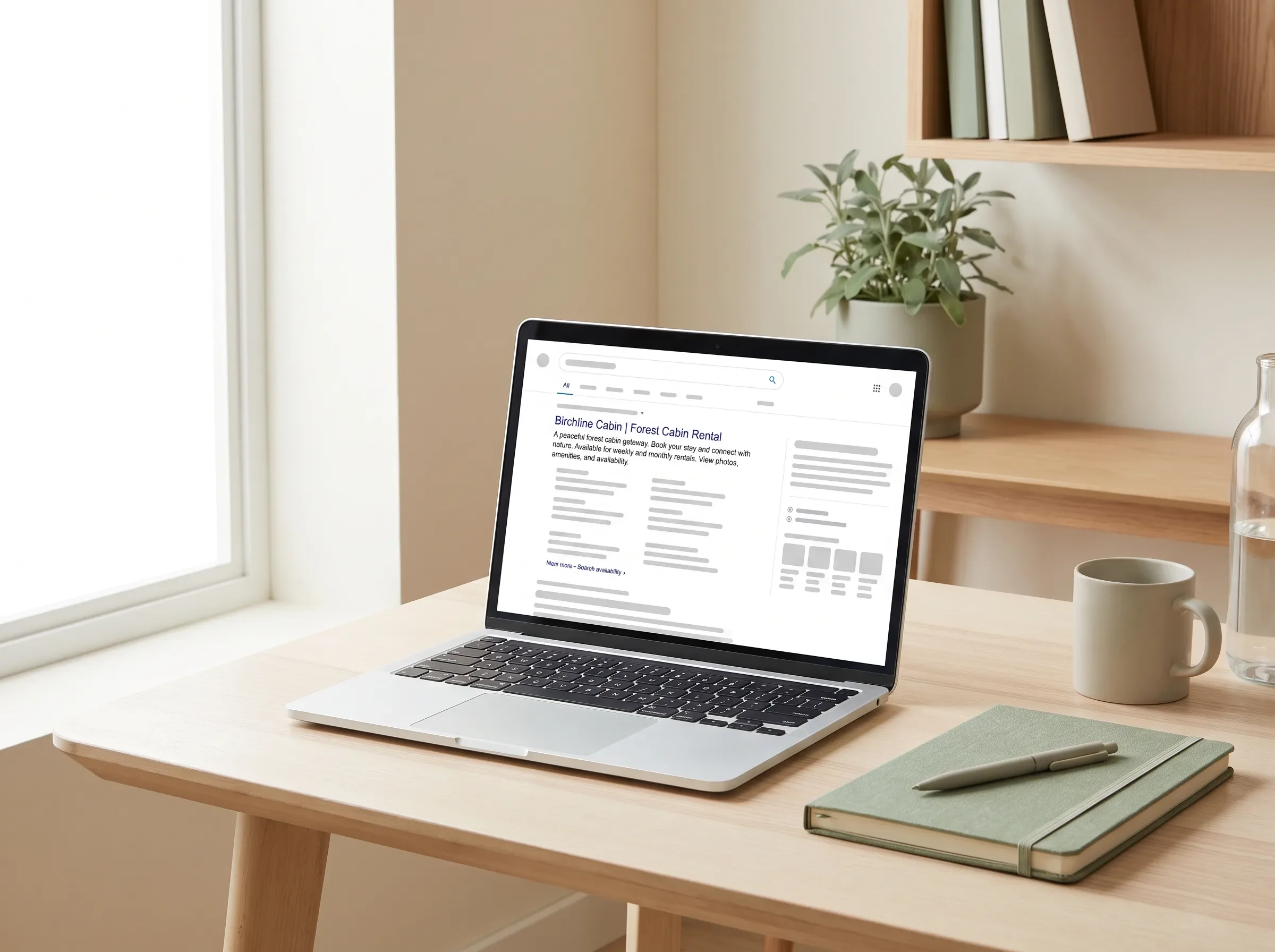
Your homepage title tag and H1 should say what a guest is actually searching for, in language they'd recognize, not language that sounds good in a listing description. This is the one most hosts get wrong first, because it feels like marketing copy when it's actually infrastructure.
Does Your Meta Description Match What's on the Page?
The meta description is the sentence under your listing in search results, and it's one of the first things an AI crawler reads to decide what your page is about. If it's generic, missing, or describes a different property type than what's actually on the page, it works against you the same way a mismatched title tag does. Write one sentence, under 160 characters, that states plainly what the page is and where it is.
Have You Written Anything AI Search Can Actually Cite?
This is the step almost nobody does, and it's the one with the highest payoff. AI search tools favor pages that answer a question in the first two or three sentences, in plain language, without making the reader hunt for it. A simple “best of” or “here's what to know” post, with your own property named as the answer, is one of the most reliably cited formats right now — not because it's clever, but because it's structured the way these tools read.
You don't need a content calendar to start. One post, built around one real question your guests ask before booking, is enough to test whether this works for your site.
How Is Getting Cited by AI Different From Ranking on Google?
Ranking and citation aren't the same job, and treating them as one is how most hosts end up optimizing for the wrong thing. A page can rank on page one and still never get pulled into an AI-generated answer, because ranking rewards authority and backlinks, while citation rewards clarity — a fact stated once, plainly, in a sentence a model can lift without rewriting it.
That means the fix isn't more content. It's cleaner content. A page with three fuzzy, atmospheric paragraphs about “your next unforgettable escape” gives an AI search tool nothing to quote. A page with one plain sentence — “This two-bedroom cabin sleeps six, allows dogs, and includes a private sauna” — gives it exactly what it needs. Both approaches can rank. Only one gets cited.
What Does This Look Like on a Live Property Site?
This isn't theoretical. Running the same five checks against Fjellsangin, the cabin near Mount Rainier this studio operates and tests every recommendation on, turned up the same class of small, fixable gaps: a homepage hero written in mood language with no plain statement of bedroom count, sleep count, or amenities anywhere above the fold, and a handful of pages where the meta description hadn't been touched since launch.
None of it was a platform limitation. Squarespace could handle every fix. The gap was the same one most independent host sites have: copy written to sound inviting, with no sentence anywhere doing the plain, boring, citable job of stating the facts a search tool — or a guest — actually needs first.
The lesson carries over directly: write the atmosphere for the guest who's already reading your page, and write one plain, fact-first sentence for the crawler deciding whether your page gets read at all.
Is Your Website Platform the Real Problem?
Sometimes, yes — but not for the reason you'd expect. If your website came free with your property management software, you're structurally capped on almost everything above. No blog. Locked metadata. No way to edit a title tag. On a platform like that, the ceiling is ranking for your own business name, and nothing above it. That makes it an ownership problem as much as an SEO one; here's what short-term rental hosts actually own.
That's a real limitation. It isn't proof that only one platform can fix it. A properly built Squarespace site generates its own sitemap, gives full control over every title tag and meta description, supports a real blog with full HTML control, and manages robots.txt for you, with a setting that blocks AI training crawlers like GPTBot while leaving the search crawlers alone. Every check above is something a Squarespace-built direct booking site can pass on its own. The gap isn't the platform category — it's whether the site was built as a real website or bolted on as a PMS afterthought. If you're still choosing a builder, we compared Squarespace vs. WordPress for a direct booking website.
Common questions
Do I need a blog to show up in AI search results?
Not strictly, but it's the fastest way to get cited for the specific questions your guests are already asking before they book. A homepage alone rarely gives an AI search tool enough plain-language text to lift and cite.
Can a free, PMS-provided website ever rank well?
Not past your own business name. Without control over metadata, sitemaps, and content, there's a hard ceiling regardless of how good the property or photos are.
How Do I Run This Audit on My Own Site?
Pull up your own site right now and check the title tag against what's actually on the page. For the full five-point check, the STR Starter Audit scores AI-search readiness as part of visibility, alongside your listing, website, guest journey and brand, and tells you which area is weakest.