
The fastest way to decide is a three-part filter: does the experience match the property's identity, can it run as a system without you personally present, and does it justify what it actually costs to deliver? If an idea fails any one of those, it doesn't belong on your Experiences page yet.
Most hosts build their experience list backward. They see a competitor offering a s'mores kit or a wine tasting and add it without asking whether it fits the property, the guest, or the business. Deciding what to offer starts with a filter, not a Pinterest board: does this experience match what this specific guest is already paying for, and can you deliver it without babysitting it. Everything else is noise.
What counts as a guest experience, versus an amenity?
An amenity is something guests expect to find when they arrive: a stocked kitchen, clean linens, a working thermostat. A 2025 study in Annals of Tourism Research Empirical Insights, drawing on thousands of Airbnb listings, found that kitchen, bedroom, and bathroom basics had no significant association with the guest experience. An experience is something they didn't expect and will mention in the review. A hot tub is an amenity. A guided instruction card for using the hot tub with a bottle of local sparkling wine already chilling in it is an experience. The line matters because amenities protect your rating and experiences build your reputation — and reputation is what a guest remembers when they're deciding whether to book you directly next time instead of searching Airbnb again.
That distinction is the whole argument for building experiences into your property at all. A guest with a forgettable stay opens the OTA app again next trip. A guest with a story attached goes looking for your name instead.
How do you evaluate whether an experience is worth offering?
Run every idea against three questions before it goes on the list:
Does it match the property's story? A farmhouse table set with a local cheese board fits a Sonoma-style vineyard property. The same board feels random bolted onto a ski cabin. An experience that doesn't match the property's identity reads as decoration, not hospitality — guests notice the mismatch even when they can't name it.
Can it run without you standing there? The best experiences are systems, not favors. A welcome basket that restocks itself from a standing local vendor order is a system. A handwritten note you personally deliver every Friday is a favor, and favors don't scale past your second property or your first vacation.
Does it justify what it costs to deliver? Cost isn't just the wine or the firewood. It's the restocking, the vendor relationship, the cleaning crew's extra ten minutes, the thing that breaks the first month and needs a fix. An experience that costs $40 in goods but eats two hours of coordination every turnover isn't a $40 experience — do the math before you commit to it.
An idea that fails any one of these isn't automatically wrong, but it needs a real reason to stay on the list. Most hosts skip this step entirely and end up maintaining three experiences nobody mentions in reviews, and one nobody remembers to restock.
What is the three-tier experience framework?
Once an idea clears those three questions, sort it into one of three tiers. This is the structure we build into every Experiences page we design, because guests read differently depending on which tier they're looking at.
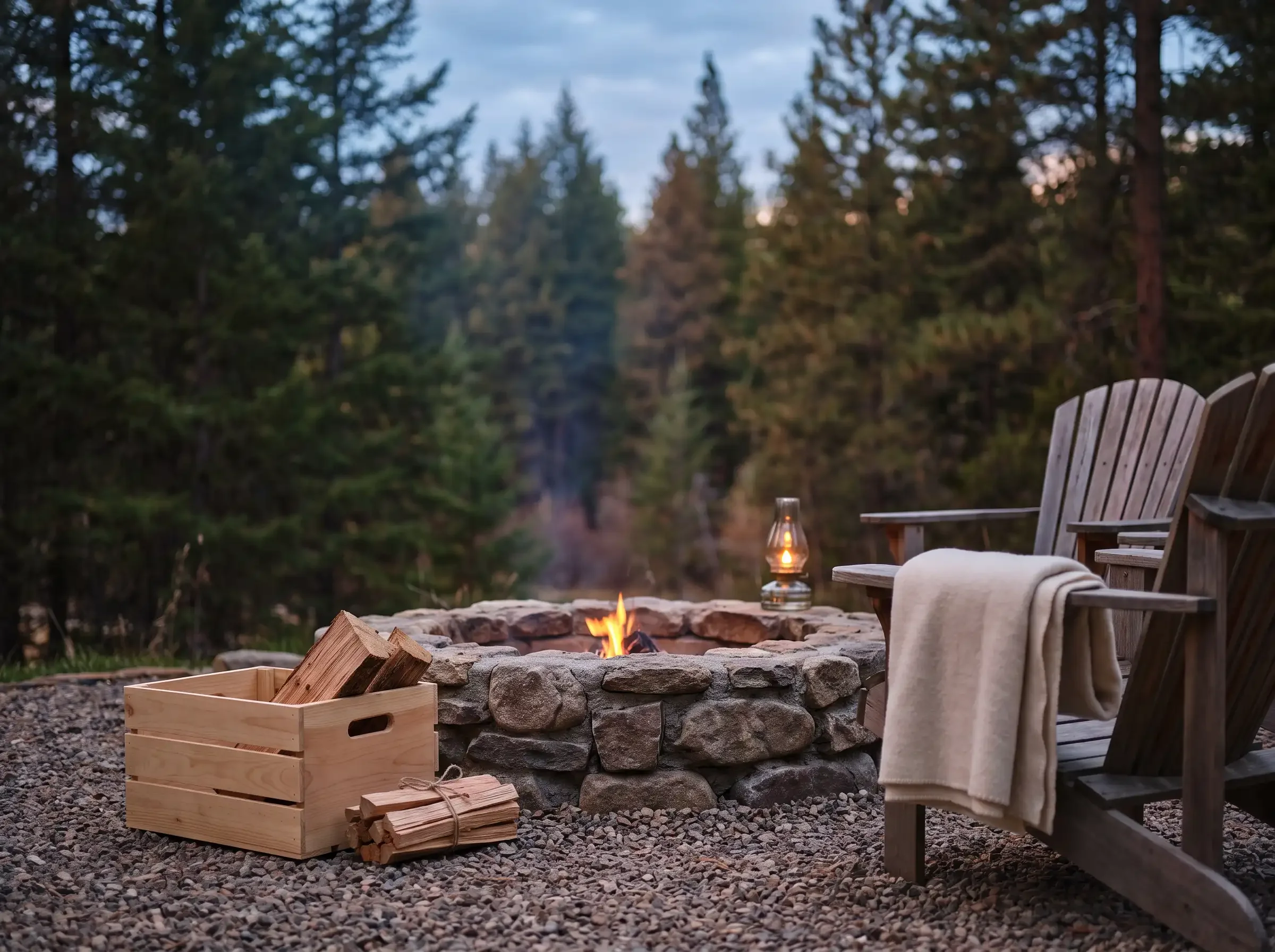
Signature. The one or two things this property does that no other listing in the area does. This is the tier your listing photos and your headline should be built around — it's the reason someone picks you over the next cabin in the search results. A signature experience should be specific enough to describe in one sentence: a stocked outdoor sauna with a guided cold-plunge routine, a trail map marked up with the owner's own mile-by-mile notes, a fire-pit kit built around the region's specific wood. Generic doesn't work here. "Beautiful views" is not a signature experience; anyone can claim that. The same test applies to the brand as a whole: if another host's name could replace yours without anyone noticing, audit your brand before you buy more traffic.
Seasonal. What changes with the calendar. A snowshoe loan program in winter, a berry-picking map in July, a stargazing kit for the new moon weeks. Seasonal experiences keep returning guests curious about what's different this time, and they let you market the same property differently year-round without touching the core listing.
Paid add-on. Anything a guest can choose to purchase on top of the base stay — a grocery pre-stock, a private chef night, a mid-stay cleaning, a gear rental. This tier is where guest experience turns into ancillary revenue, and it only works if it's optional and easy to say yes to at the right moment. Industry data on short-term rental upsells consistently points to timing over selection: offers presented during check-in or pre-arrival convert far better than anything emailed days ahead, when the guest isn't yet in trip-planning mode.
Three tiers is enough. A host trying to fill all three with five options each ends up with a wall of choices that overwhelms rather than delights, and an operations list nobody can actually maintain.
How many experiences should a small STR actually offer?
For an owner running one or two properties, the honest number is smaller than most Pinterest boards suggest: one strong signature experience, two or three seasonal rotations across the year, and two or three paid add-ons. That's it. A host with unlimited time could run more; a host with a day job, a cleaning schedule, and a life cannot, and pretending otherwise is how experiences quietly become the thing that never gets restocked.
This is also where the direct-booking math becomes concrete. Every guest experience you build lives entirely on your own site and in your own guest communication — an OTA doesn't let you merchandise a paid add-on the way your own booking flow can, and it never lets a guest associate that experience with your brand instead of the platform's. You did the work of designing it; the platform, in the standard OTA relationship, keeps roughly 15.5% of the booking and gives you no channel to remind that guest it was your idea. A direct-booking site with an Experiences page lets you own the payoff of the experiences you're already building.
What experiences should you avoid?
Anything that requires you to be personally present doesn't belong on the list — it's a favor, not a system. Neither does anything with a liability question you haven't actually checked: professional-grade tools, firearms, anything that needs supervision you're not there to give. And be honest about ideas that exist mainly for the listing photo. A rooftop projector screen photographs well and turns into a maintenance problem in a coastal climate by month three. A "chef's kitchen" with equipment nobody touches just adds cleaning time. If an idea came from wanting the listing to look impressive rather than wanting a specific guest to have a good time, it's usually the wrong one.
Also skip anything you can't describe in one sentence on your website. If it takes a paragraph to explain what the experience even is, it won't survive a guest skimming your Experiences page, and it definitely won't survive word of mouth.
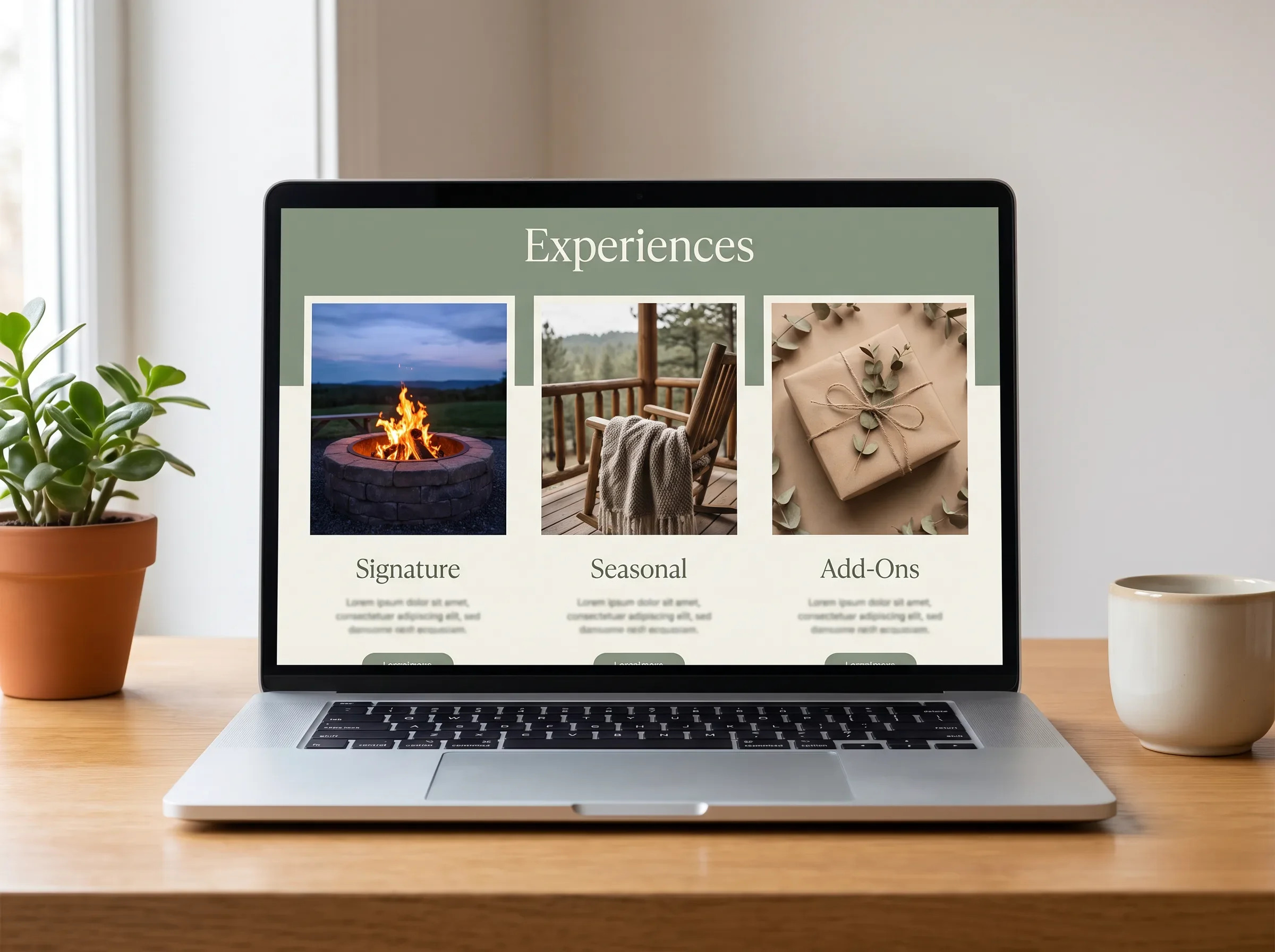
If you can't tell whether your weak spot is the experience layer, the brand or the booking site, the STR Starter Audit looks at all of them and shows you which to fix first, before you spend money on the wrong one. Building a new site? Every Brand Edition includes an Experiences page set up around this three-tier framework. If you'd like to work through your signature tier on your own, the Signature Experiences Playbook ($97) is in the shop.